Choosing the right herbal medicine school is one of the most important decisions an aspiring clinical herbalist can make. With so many programs—online, hybrid, folk-based, tradition-specific—it can feel overwhelming to know where to begin. When I started searching, I knew exactly what I wanted:
- A rigorous, clinically-oriented education
- A curriculum rooted in Western herbal energetics and modern science
- Hands-on clinical experience, not just theory
- Teachers who were practicing herbalists, not just lecturers
- A school that felt grounded, human, and deeply connected to place
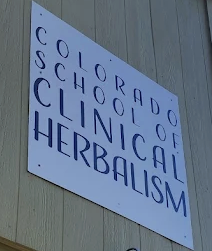
That search led me to the Colorado School of Clinical Herbalism (CSCH)—and the moment I found it, something clicked. This was the kind of herbal education I had been looking for: structured, experiential, evidence-informed, and soulfully connected to plant medicine.
In this post, I’m sharing how I found CSCH, why I chose it, and what makes it stand apart from other herbal programs across the country.
🌱 How I Found the Colorado School of Clinical Herbalism
Like many future herbal clinicians, I started with the usual route: Google searches, herbal forums, AHG-approved training lists, and endless comparisons of curriculum outlines.
But CSCH kept coming up again and again.
Every review, student testimonial, and teacher interview painted the same picture:
- A school deeply committed to clinical practice
- Courses taught by knowledgeable herbalists with real-world experience
- A curriculum that blends traditional herbal energetics, functional medicine, botany, and evidence-based physiology
- A learning environment that felt like community, not a corporation
The more I read, the more I realized: this wasn’t just a school. It was a lineage.
🌿 Why I Chose the Colorado School of Clinical Herbalism
1. A Truly Clinical Focus (Not Just “Herbalism 101”)
One of the biggest issues in herbal education today is that many programs stay surface-level. You might memorize plant profiles or learn simple remedies, but you never gain the skills needed to actually work with clients.
CSCH is different.
Their curriculum is built around clinical herbalism from day one, with courses in:
- Herbal safety & pharmacology
- Anatomy & physiology
- Pathophysiology
- Western herbal energetics
- Nutrition & lifestyle medicine
- Materia medica at a professional level
- Functional assessment skills
And most importantly: supervised clinical hours in the CSCH Apothicare Clinic.
This was a huge deciding factor for me. I didn’t just want to “know about herbs.” I wanted to practice herbal medicine with confidence and integrity.
2. Experienced Practitioner-Teachers
At many herbal schools, the instructors are passionate but not necessarily clinicians. At CSCH, the faculty includes herbalists, clinicians, nutritionists, bodyworkers, and plant scientists actively working in the field.
Their teaching style is deeply experiential, weaving:
- Traditional Western herbal energetics
- Eclectic and Physiomedicalist traditions
- Modern science and physiology
- Real client cases
- Practical skills and assessments
Learning from real practitioners felt essential to me. I wanted teachers who could share what actually works in the treatment room—not just what works on paper.
3. A Science-Informed Approach Without Losing Herbal Wisdom
CSCH strikes a rare balance: clinical, modern, and research-aware, yet still firmly rooted in traditional energetics and the spirit of the plants.
Unlike many programs that lean hard in one direction (all scientific) or the other (all folk tradition), CSCH integrates:
- Evidence-informed herbalism
- Vitalist philosophy
- Holistic assessment methods
- Whole-plant medicine
- Root-cause approaches to wellness
This blend of science and soul felt like the perfect fit for my path—and for the type of practitioner I aspire to become.
4. Hands-On Learning in the Field and the Apothecary
Another reason I chose CSCH is their emphasis on doing:
- Wildcrafting and plant identification
- Medicine making
- Formulation labs
- Creating teas, tinctures, syrups, oxymels, and salves
- Working with fresh and dried plant material
- Materia medica journaling
- Clinical formulations customized to clients
This wasn’t an academic-only experience. It was immersive, sensory, and tactile—exactly how herbal medicine should be.
5. A Supportive Community Rooted in Respect for the Plants
Herbalism is more than a credential; it’s a way of relating to the natural world.
What stood out about CSCH was the culture:
✨ Respect for the plants
✨ Respect for the lineage of herbalism
✨ Respect for diverse backgrounds and healing traditions
✨ Respect for evidence, safety, and ethics
Every part of the school felt aligned with my values as an herbalist—earth-honoring, integrity-driven, and community-centered.
🌿 How CSCH Stands Apart from Other Herbal Schools
✔ Offers supervised clinical hours (a key requirement for AHG RH(AHG) recognition)
Many programs teach theory. CSCH prepares you for real clients.
✔ A comprehensive curriculum with both science & energetics
Few herbal schools blend these so skillfully.
✔ In-person and online, immersive education in a botanical-rich region
The Rockies are an herbal classroom of their own.
✔ Practitioner-level training suitable for future clinicians
Not all herbal schools prepare you for clinical practice—CSCH does.
✔ Strong community, ethics, and lineage
You feel part of something meaningful, not just enrolled in a course.
✔ A non-dogmatic, open-minded approach
They teach multiple philosophies with clarity, not rigidity.
✔ Apothecary-based training that teaches real formulation skills
Not just recipes—clinical formulation thinking.
🌿 Final Thoughts: A School That Shapes Herbal Clinicians
Finding the right herbal school is deeply personal. For me, the Colorado School of Clinical Herbalism offered everything I was looking for:
- Depth
- Rigor
- Integrity
- Connection
- Community
- True clinical training
It felt like a place where herbal medicine is not only taught—it’s lived.
And that’s why I chose it.
Leave a Reply